



The initial cost is divided by the estimated useful life of the asset to determine the amount of amortization expense to be recorded each period. Accumulated Amortization is a contra-asset account that represents the total amount of amortization expense that has been recorded for an intangible asset or a tangible asset over its useful life. This reassessment not only helps in determining the reliable lifespan and value of assets, but it also directly impacts the financial performance of an organization. The balance sheet displays the accumulated depreciation and amortization as a contra asset account, which means Law Firm Accounts Receivable Management it’s a deduction from the original cost of the asset. The tax implications of accumulated amortization are significant for businesses.
- In order to understand where accumulated amortization goes on the balance sheet, it’s important to first grasp the concept of amortization and its significance in financial reporting.
- Now that we have a basic understanding of the balance sheet, let’s explore how amortization fits into this financial statement and where accumulated amortization is recorded.
- Another difference is that the IRS indicates most intangible assets have a useful life of 15 years.
- If the building’s fair market value increases to $$600,000$$, the company might need to reassess the amortization expense to reflect the new value and remaining useful life.
- Typically, amortization is classified as a contra-asset account on the balance sheet.
- To illustrate these points, let’s consider a company that has acquired a patent for a new technology.
Related Terms
For example, consider a company that purchases a patent for $100,000 with an expected useful life of 10 years. Using the straight-line method, the annual amortization expense would be $10,000. Each year, the company would make a journal entry debiting amortization expense and crediting accumulated amortization for $10,000. From the perspective of an accountant, contra asset accounts are essential for maintaining the accuracy of financial statements. They ensure that assets are not overstated and that the financial health of the company is not misrepresented.
The Future of Accumulated Amortization in Accounting Practices
- This accounting process is not merely a matter of compliance or routine record-keeping; rather, it provides valuable insights into asset utilization, cost management, and future investment planning.
- Depreciation is recorded to reflect that an asset is no longer worth the previous carrying cost reflected on the financial statements.
- From an investor’s point of view, the amortization of assets can provide insights into a company’s operational efficiency and future earning potential.
- Conversely, if a company’s revenue grows in proportion to its amortization, it indicates efficient use of assets.
The amortization of software is calculated based on the cost of the software, the useful life of the software, and the expected future cash flows generated by the software. Amortization reduces the value of the intangible asset on the balance sheet and increases the expense on the income statement. To understand the accumulated amortization of assets, understand that the assets in question are intangible in nature.
The Process of Amortization in Business Accounting

Now that we have a clear understanding of amortization and its purpose, let’s explore where accumulated amortization is recorded on the balance sheet. Before we delve into the details of where accumulated amortization goes on the balance sheet, let’s start with a brief overview of what the balance sheet is and its purpose in financial reporting. It ensures that assets are carried on the balance sheet at an appropriate value, reflecting their true economic value and mitigating the risk of misstated financial statements. Effective management of accumulated amortization involves precise tracking and recording, periodic reassessment of useful life and residual value, and Accounting Periods and Methods transparent disclosure in the financial statements. Proper accounting treatment of accumulated amortization is essential for providing accurate and transparent information to investors and stakeholders.

Why Does Accumulated Amortization Matter?
By spreading out the amortization expense, businesses can benefit from tax deductions annually instead of all at once. Deducting capital expenses over an assets useful life is an example of accumulated amortization amortization, which measures the use of an intangible assets value, such as copyright, patent, or goodwill. In accounting, amortization refers to a method used to reduce the cost value of a intangible assets through increments scheduled throughout the life of the asset. From the perspective of a small business owner, managing cash flow in the context of accumulated amortization means being proactive about payment schedules and revenue streams.

Amortization expense vs. depreciation expense
- Understanding accumulated amortization is vital for stakeholders to assess the long-term financial health and operational efficiency of a business.
- This not only provides a more accurate picture of the company’s financial health but also impacts key financial metrics and ratios that investors and stakeholders scrutinize closely.
- This is because it is subtracted from the original cost of the asset to arrive at its net book value.
- When it comes to business, amortization refers to the practice of repaying debt on a set timeline.
- Depreciable property is otherwise known as a depreciable asset, this is an asset that can be depreciated following the Internal Revenue Service (IRS) rules.
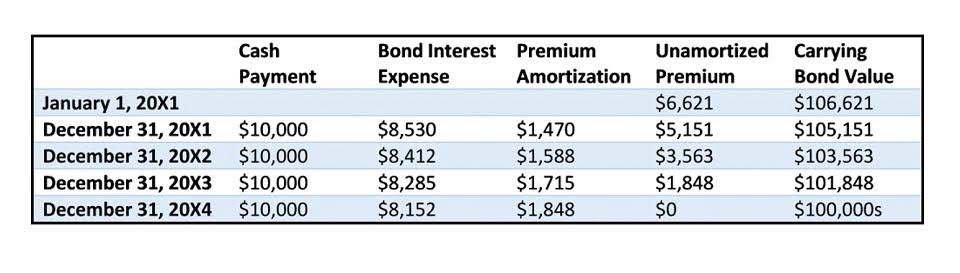
By understanding how amortization works, borrowers can make informed decisions about their loans and manage their debt more effectively. An amortization schedule is a table that shows the breakdown of each payment over the life of the loan. It includes the payment amount, the amount of interest paid, the amount of principal paid, and the remaining balance.